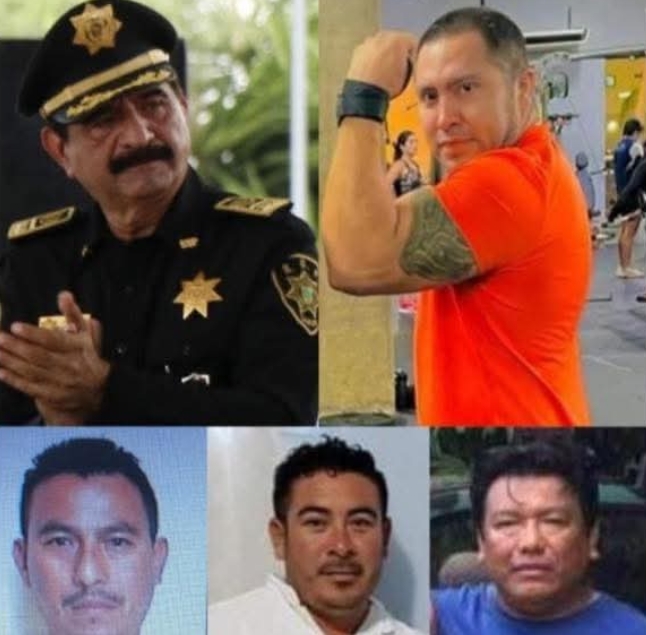

The Yucatán Public Security Secretariat refuses to make public the tax and asset declarations of its high-ranking officials who allegedly own properties (farms and residences), businesses (bars, brothels, gyms, social event venues, pawn shops, among others), luxury cars, and, to top it all off, live like millionaires on a bi-weekly salary of only $12,600. Among these “police magnates” are allegedly Deputy Director Carlos Eduardo Flores Moo, Juan Gabriel Ramirez Jiménez, Director of the State Investigative Police (PEI), Mariano Rodríguez Salazar, Director of Anti-Narcotics for the PEI, Marcos José Mena Can, Director of the Center for Control, Command, Communication, Computing, Coordination, and Intelligence, and Edgar Manuel Chi Chuil, Director of the Legal Department of the Yucatán Public Security Secretariat, along with the Attorney General of the State of Yucatán, Omar Adrian Ojeda Ojeda, alias “the planter of false evidence.”
According to Witnesses within the SSP (Secretariat of Public Security) and the FGE (State Attorney General’s Office)
are allegedly becoming millionaires through criminal activities ranging from extorting protection money from drug dealers and fuel thieves, to protecting drug trafficking routes between Progreso and Mérida, Progreso and Las Coloradas, Quintana Roo and Tekax, and Tizimín and Panabá, to selling cloned vehicles, trafficking sea cucumbers, extortion, and the theft of safes, money, and jewelry during staged operations—acts in which Attorney General Juan Manuel León León may be involved.
In previous articles, we revealed some properties far exceeding a police officer’s salary and high-end cloned vehicles belonging to the commanders Carlos Eduardo Flores Moo, deputy director of the SSP (State Public Security Secretariat), and Juan Gabriel Ramirez Jiménez, alias “El Grillo,” director of the State Investigative Police (PEI). This information can be found in the “links” section of this article so that our readers can understand the extent of corruption within the Yucatán State Public Security Secretariat, which SSP members themselves refer to as an institutional cartel with badges and uniforms. According to informants, this cartel has direct ties to organized crime in the neighboring states of Chiapas, Tabasco, Veracruz, Campeche, and Quintana Roo.
In stark contrast to the testimonies from active police officers of the Yucatán State Public Security Secretariat (SSP) and citizens affected by the alleged crimes committed by public servants of dubious honesty disguised as police commanders, it is deeply concerning that the Yucatán State Public Security Secretariat is concealing and denying public access to the tax and asset declarations of its high-ranking officials, including those mentioned above, who strangely live like millionaires while earning a bi-weekly salary of $12,600.
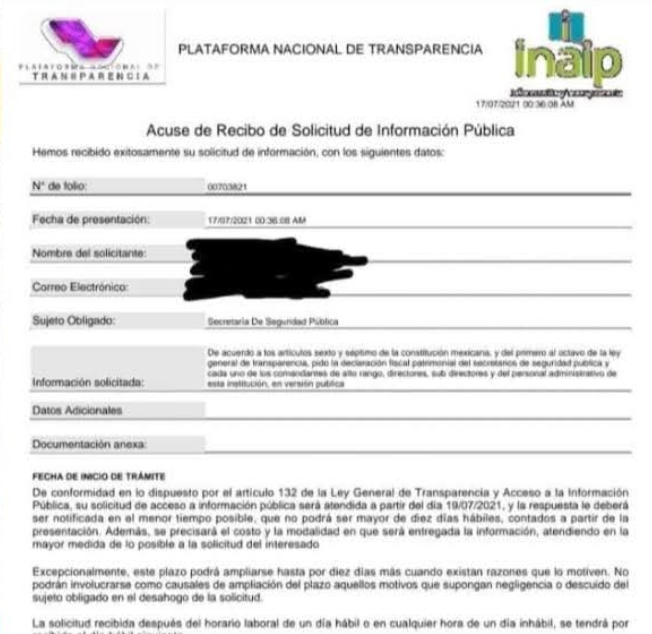
It is worth noting that there are several public information requests submitted through the National Information Platform (INAI) requesting the tax and asset declarations of the public servants in question. An example of this is request number 00703821, dated July 17, 2021, which they simply refused to provide due to the complicit apathy, delays, and obstruction of the Transparency and Access to Public Information Institute (INAI). The Public Information and Personal Data Protection Institute of the State of Yucatán (INAIP) has refused to make this information transparent to date.
The same occurs with the State Attorney General’s Office, an institution that has actively participated in robberies justified as “anti-narcotics operations” in alleged criminal coordination between the State Police (SSP) and the State Attorney General’s Office (FGE), where safes, jewelry, and cash have been stolen. Apparently, all the cases staged as operations are always justified as stemming from “anonymous reports.” According to witnesses, the directors of the eastern sector, Jorge Eduardo Chalé Lara “alias Lagarto”; the northern sector, Ángel Antonio Torres Méndez; the southern sector, Jesús Alberto Ku Chel; the western sector, José Ignacio Avilés Canul; and the central sector, Miguel Ángel Suaste Huex, cover up the work of lookouts by sending personnel under their command and drug-dealing gang members who operate for them to loiter and stalk businesses and homes of citizens, businesses of all kinds. These individuals are tasked with gathering photographic information on their “targets” (business owners and merchants), vehicle license plate numbers, makes and models, and house numbers. Businesses, names, and addresses of the schools where the children of their targets study. This information is then directed to Undersecretary Carlos Eduardo Flores Moo, who, together with Prosecutor Omar Adrian Ojeda Ojeda, initiates an “anonymous” complaint in which operators later appear as complainants.
And the Attorney General’s Office (FGE), headed by Juan Álvarez Dávalos,
on the official websites of both government agencies, criminalizing citizens by violating the presumption of innocence and due process.
However, despite the monumental accumulation of irregularities that are readily apparent, there are those who conveniently justify the actions as legitimate and within the framework of the law, except that among the items taken as evidence by the public servants involved in the robberies disguised as anti-narcotics operations, large sums of cash, jewelry, safes, property deeds, vehicles, and even animals such as cattle, horses, pigs, and sheep belonging to the detainees are never returned to them. These are allegedly the loot and one of the activities of unjust enrichment of the questionable police officers of the State Police (SSP) and prosecutors of the FGE, according to witnesses.
Source: mexicodailypost