Merchants in Durango’s capital city suffer the consequences of what happens on the country’s highways, such as extortion by traffic police in cities like Monterrey and Guadalajara, as well as in other states in the central and Bajío regions of the country where this also occurs. They also face theft while transporting goods to and from Durango.
For business owners in Durango’s capital, this issue disrupts their finances and hinders their growth.
Those who sell their products outside of Durango face the risk of theft, in addition to extortion by traffic police who, upon entering various cities, prevent them from passing. This fosters impunity, since local business owners fear reprisals from traffic officers in those cities, making it more practical to avoid endangering the safety of their drivers and their vehicles.
The losses are not only incurred by local businesses, but also by the products arriving in Durango, which are priced higher because, at least for basic food items, they reach the state with a surcharge that end consumers must absorb.
Members of the private sector in the municipality of Durango have stated that these price increases are due to the security and corruption conditions that exist on the highways and in the cities where the products are sold. This creates an additional expense that businesses must bear, and this significantly impacts local entrepreneurs.
This phenomenon creates an inflationary spiral in Durango, which is one of the reasons why costs rise so significantly in the state.
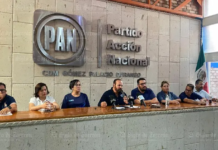
One of the high fees that Durango merchants face in other states of Mexico is the payment they make to traffic police in the main cities of northern and central Mexico. The amounts reach up to 15,000 pesos, and this is done out of fear of reprisals, said Reynaldo Dozal, advisor to the National Chamber of Commerce.
“I call them criminals, but with badges. This has become commonplace. Before, it was only in the south, but now it’s also been reported in the city of Monterrey. To enter the city, you have to pay a fee ranging from 5,000 to 15,000 pesos to unload, because let me tell you, they give you a code, a number, and a sticker that you have to pay for to enter.”
But it’s not just the issue of the fees; the safety of the drivers is also at risk when they consider not only not paying but also filing a complaint, because there could be reprisals, even against the vehicle, and it could be lost forever.
“You run the risk; once, a driver called me and said, ‘They’re asking me for 10,000 pesos to enter Guadalajara.’ If you say you’re going to file a complaint, you risk having the driver disappear, the truck vanish, or you going and putting yourself at risk, only to leave feeling powerless because you can’t do anything.”
He indicated that, over the years, the number of cities where traffic police must be paid to enter or to sell products in the city you’re visiting has increased. And that, given the rise in this type of extortion, they are now considering closing the country’s highways in conjunction with producers and farmers due to the lack of guaranteed prices for their products.
“It’s the same municipal traffic police in Monterrey and Guadalajara; it’s an everyday occurrence. If this continues, there will be road closures; on one side, farmers who are dissatisfied with the guaranteed prices, and on the other side, truckers, will be blocking roads so that the president takes into account all these issues that are affecting the economy.”
For his part, Sergio Sánchez, president of the National Chamber of Commerce, insisted that all products arriving in Durango come by road, and that is why prices vary, given that the greater risk involved in transportation from other states makes the supplies arriving in Durango more expensive.
He maintained that this situation has been affecting the economy for years, and therefore, Durango has a higher inflation rate than other states in Mexico. He not only called on the authorities of the states where the situation has been most prevalent.
He explained that external factors have significantly affected businesses in Durango due to connectivity issues.
But it’s not just insecurity; the state of the roads is also a problem because tire punctures have been reported, and the cost of each tire ranges between 20,000 and 25,000 pesos.
In addition to the delays caused by road damage, which affect customers when supplies don’t arrive, there are also disruptions to the production chains of local businesses.
“It’s a combination of everything. Sometimes the roads are in bad condition, and trucks get flat tires; a truck tire costs 20,000 or 25,000 pesos, but then there’s the fear that your merchandise won’t arrive. And remember, if your merchandise doesn’t arrive, it obviously affects the person bringing it, but especially the production and distribution chain.”
Finally, he commented that, so far, he is unaware of any local business owners being extorted by traffic police from major cities like Monterrey or Guadalajara.
“So far, as far as Coparmex is concerned, we have no news about it.”

Source: milenio