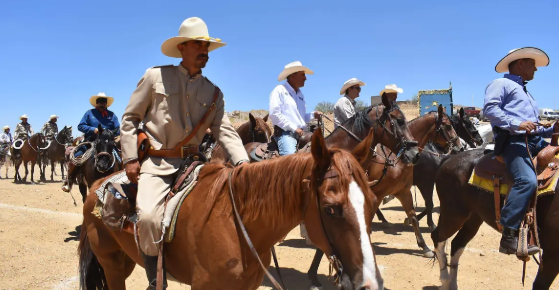

The arrival of riders from Durango to participate in the Villista Cavalcade has livestock producers in the region concerned, following the confirmation of screwworm cases in the state of Durango. Given this situation, the State Government’s Secretariat of Rural Development reported that inspection and disinfection measures are already being implemented to minimize the risk of introducing the pest to Chihuahua.
The head of the state agency’s Livestock Department, Juan Carlos Flores, explained that, although it was not possible to establish a protocol to prevent the entry of participating horses, it was decided to reinforce sanitary checkpoints to ensure that the animals enter under safe conditions.
He specified that all individuals arriving with horses at the quarantine stations must subject the animals to a spray bath, in addition to a thorough physical inspection to detect any injuries or signs of myiasis. Likewise, the trailers used for their transport will be washed and disinfected before continuing their journey.
The official stated that these actions aim to prevent some participants from entering the state irregularly to evade health checkpoints. He indicated that it is preferable to check and inspect all horses at the established checkpoints rather than allow unsupervised transit along back roads or alternative routes.
Juan Carlos Flores warned that the screwworm is practically “at the doorstep” of Chihuahua, so he emphasized the importance of acting responsibly during animal transport. He stressed that a single omission in sanitary measures could facilitate the spread of the pest to different regions of the state.
As part of the preventative strategy, he reported that the state government maintains an active surveillance system using 51 traps distributed in the border areas with Durango, Sinaloa, Coahuila, Texas, and New Mexico, after the devices were relocated from the center of the state to the state and international borders just over two weeks ago.
He added that the traps allow for the timely detection of the insect’s potential arrival in Chihuahua. Although he acknowledged that some producers have expressed interest in installing their own traps, he explained that these devices require specialized maintenance every three days. Therefore, the authorities will continue to provide support to those willing to operate them correctly.
Finally, the head of Livestock urged the public not to let their guard down during the holiday season, reminding them that the screwworm not only affects cattle, but also dogs, birds, and other warm-blooded animals. He recommended carefully checking any wounds, as well as the eyes, nose, and mouth of pets before transporting them to other states, in order to prevent the spread of this pest.
Source: oem